Each of these problems costs money. Condensed water ruins cardboard boxes, documents and equipment. Neglected rust eats right through after a few seasons and the container starts to leak. And when you want to sell it, a damaged container will be worth noticeably less than a well-kept one.
Below we describe what is worth changing in a container that is yours and how to look after it so that it lasts for years. The rules described are Polish, because that is where the listings on Maszbox.pl are located.
What you can change in a container that is yours
In a rented container you are usually not allowed to drill or modify anything without the advertiser's consent. We write more about what renting allows with containers for rent. An owner, on the other hand, can adapt the container to their needs:
- add ventilation,
- insulate the walls and ceiling,
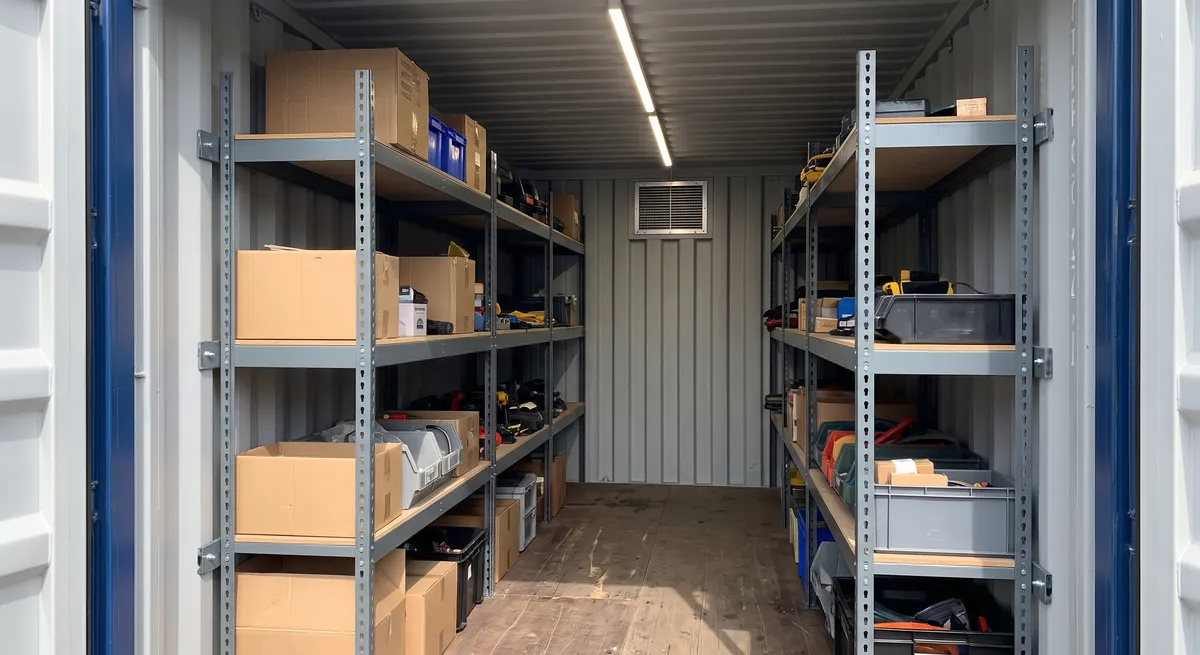
- screw shelving to the walls,
- bring in lighting or electricity,
- add security, for example a padlock cover.
Bigger structural modifications, such as cutting out a window or an extra door, weaken the container's walls. Have them done by a company that specialises in adapting containers. Ask at the county office (starostwo) whether such a modification requires formalities.
Ventilation: the first modification in a storage container
Water in a container usually comes from condensation: humid air inside meets the cold steel and settles on it as droplets. The better the ventilation, the lower this risk.
- Check the factory vents. Many containers have them. Make sure they are not blocked or taped over.
- Add ventilation grilles if the factory vents are not enough. Air circulates best when the grilles are on opposite walls, one lower and the other higher.
- Put in dry things. Wet cardboard boxes or equipment brought in the rain carry moisture inside, which then condenses on the walls.
How to protect the stored things themselves (platforms instead of the floor, a gap from the walls, closed containers) is described in the article small warehouse for an online shop.
Insulation: when it makes sense
An ordinary, uninsulated container is enough for tools, tyres, garden furniture or building materials. Insulation makes sense when:
- you store things sensitive to frost and temperature swings, for example documents, electronics or water-based chemicals,
- the container is also to serve as a workshop or workplace.
Insulating the walls and ceiling from the inside reduces temperature swings and limits condensation on the cold steel, but it takes up some space inside. It is best to have it done by a company that adapts containers, because badly fitted insulation can trap moisture instead of limiting it. If you mainly store sensitive things, compare the cost of insulation with a warehouse inside a building. We describe the differences in the article warehouse or container.
Shelving, lighting and electricity
- Shelving screwed to the walls is more stable than freestanding shelving and lets you use the height of the container. Remember that every hole in the wall is a potential spot for leaks and rust, so seal it.
- Lighting: without electricity, a battery-powered or solar-powered LED lamp is enough.
- Electricity: have the connection and wiring done by a qualified electrician. A metal structure is no place for makeshift extension cords.
How to plan shelving and a walkway in a small space is shown in the article small warehouse for an online shop.
Maintenance: roof, doors, floor and rust
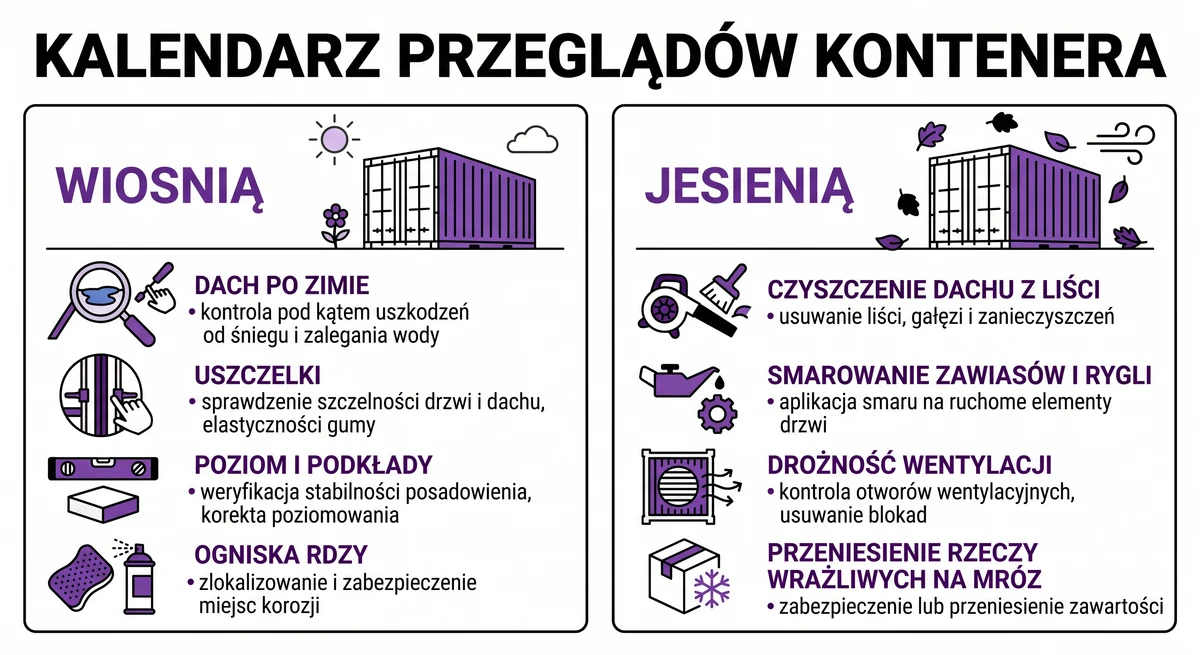
- Roof: remove leaves, snow and standing water. Dents where water collects quickly start to rust.
- Rust: clean spots of corrosion with a brush and protect them with anti-corrosion paint before the rust eats through. Surface rust is normal, holes in the steel are not.
- Doors: lubricate the hinges and locking bars, and check the seals. A cracked seal is the most common place for a leak.
- Container level: if the doors have started to stick, check whether the container still stands level. The sleepers can settle over time.
- Floor: it is usually wooden, so protect it from water and check for soft, soaked spots.
- Ground: see whether water stands under the container after rain.
A well-kept container is easier to sell
When you no longer need the container, buyers will look at the same places: the roof, doors, floor and spots of rust. What exactly they check is described in the containers category. Regular maintenance is therefore also protection of the price you will sell it for.
Keep the invoice or purchase contract and photos of the container. Describe modifications such as ventilation, insulation or shelving in the listing, because they are real value for the buyer. You can add the listing for free by following the guide to adding a listing, and it will go into the containers for sale category.

Marsel Zychowski
MaszBox Team
We share practical know-how on renting and selling space - garages, warehouses, storage units, parking spots and more.