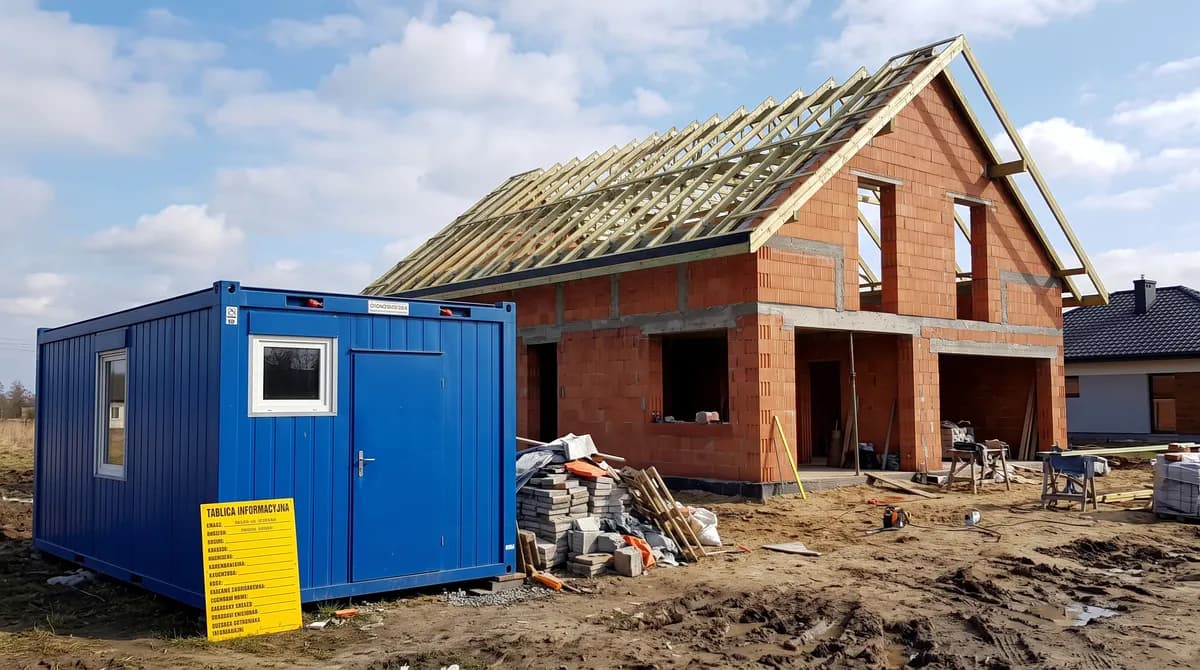
Thefts on building sites are not rare, and a single night can cost as much as a new plate compactor or a set of power tools. On top of that come damp cement, adhesive ruined by frost and downtime while the crew waits for you to bring the equipment. A container on the building site solves most of these problems, but only if you rent it for the right period, place it in a good spot and organise access well.
Below is everything step by step: when a container is useful, whether it requires formalities, where to place it, what to keep in it and how to protect tools. The rules described are Polish, because that is where the listings on Maszbox.pl are located.
At which stage of the build a container is useful
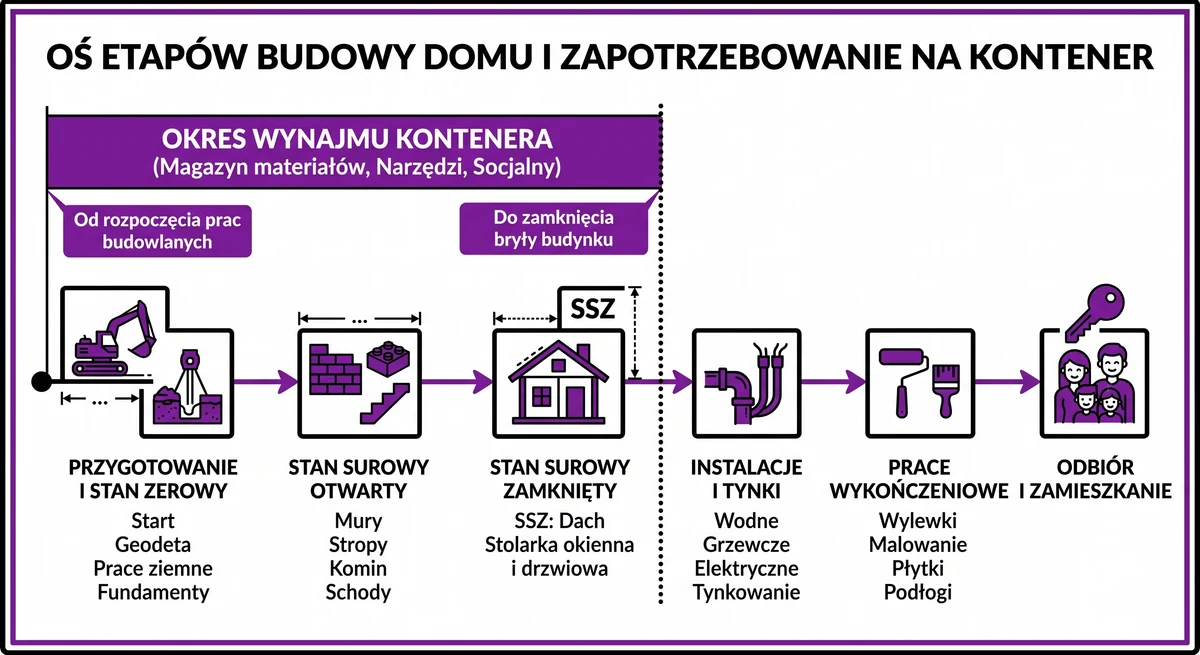
A container is most needed when there is no lockable room on the plot yet, that is from the start of work until the closed shell stage. At the closed shell stage the building has walls, a roof, windows and external doors. From then on you can lock tools and materials inside the building itself, for example in the garage or one of the rooms, and the container is no longer necessary.
So plan the rental for the period from the arrival of the first crew until the windows and doors are fitted. Building schedules tend to slip, so before renting, ask the advertiser whether the rental can easily be extended by a few weeks. If the build will take years or you plan several builds in a row, compare renting with listings of containers for sale.
Does a site container need a building permit or a notification
Under the Polish Construction Law (Prawo budowlane), structures intended for temporary use during construction work and located on the building site require neither a building permit nor a notification. A container used as site facilities falls into this category if it stands on the building site and only for the duration of the work.
If you want to place a container before the build formally starts, or leave it on the plot after it ends, ask at the county office (starostwo) whether the exemption still applies. We write about the formalities for a container standing on a plot without an ongoing build in the article warehouse or container.
Where to place the container on the plot
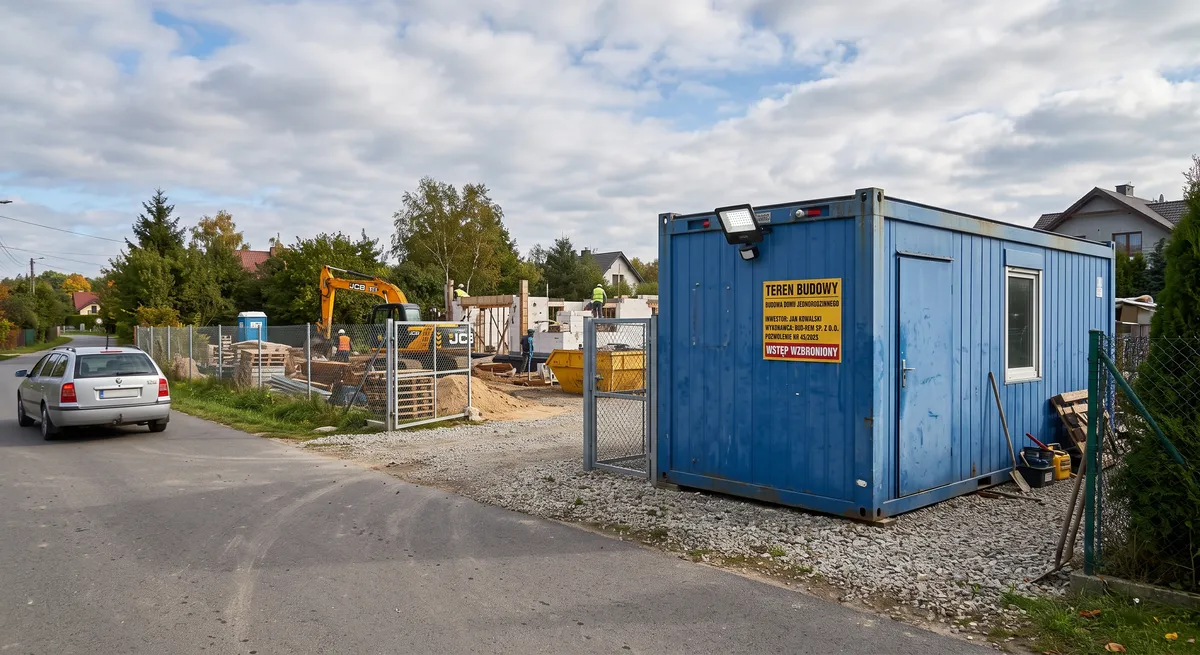
- In a visible spot: ideally facing the road or the neighbours, not in the farthest corner of the plot where nobody will notice anything.
- Close to the entrance: so that material deliveries go straight to the container door.
- Away from excavations and where machines work: the container must not block access for the concrete mixer truck, the concrete pump or the crane.
- So that it does not have to be moved: moving it during the build means another visit from a truck with a crane and an extra cost.
What ground and access a container needs when delivered is described with containers for rent.
What to keep in the container, and what can stay outside
A container has limited space, so not everything has to fit inside.
In the container:
- power tools, levelling instruments and small equipment, meaning everything that is easy to carry off and expensive to replace,
- bagged materials sensitive to damp, such as cement and adhesives,
- building chemicals that frost damages. Many water-based paints, adhesives and ready-mixed compounds do not tolerate low temperatures, so check the packaging. An uninsulated container can freeze in winter too, so do not order such materials in advance.
Outside, on pallets and under a tarpaulin:
- blocks, bricks and hollow blocks,
- reinforcing steel,
- aggregates and sand.
Order materials that are easy to steal closer to when they will be needed. The shorter they lie on the plot, the lower the risk. How damp behaves in a steel container and what this means for stored things is explained in the article warehouse or container.
How to protect tools from theft
- A solid lock: a shackle padlock or a container with a padlock cover that makes it harder to cut. What to look for when choosing locks and padlocks is described in our guide on how to secure a storage unit against theft, because the rules are the same.
- Lighting with a motion sensor: a lamp on or next to the container is a better deterrent than a dark yard. On a plot without electricity, solar lamps will do.
- A camera with phone alerts: even a simple camera gives you a signal before someone manages to carry everything off.
- Marked tools: engraving, paint or stickers with your details make stolen equipment harder to sell. Also note the serial numbers and take photos.
- Nothing outside overnight: tools left against the wall "just until tomorrow" are the easiest loot.
Before you leave expensive equipment in the container, check whether your policy covers it. Belongings outside your home are not always covered, as we explain in the article insuring belongings in a warehouse.
Keys and access when several crews work on the site
When building a house, crews change on the plot: foundations, bricklayers, roofers, installers. Each wants access to the container, which raises the question of who has the key.
- A combination padlock instead of keys: you can change the code when a crew finishes its work, while you cannot get a key back if someone has had it copied.
- One person responsible: agree with the crew leader who locks the container at the end of the day.
- A tool list: write down what is in the container and what you lend to the crew. When the crew changes, it is then easier to check that nothing is missing.
- A separate box for your own equipment: keep the most valuable tools in a lockable box inside the container that only you have the key to.
You will find containers to rent for the duration of the build in the listings in the containers category.

Marsel Zychowski
MaszBox Team
We share practical know-how on renting and selling space - garages, warehouses, storage units, parking spots and more.