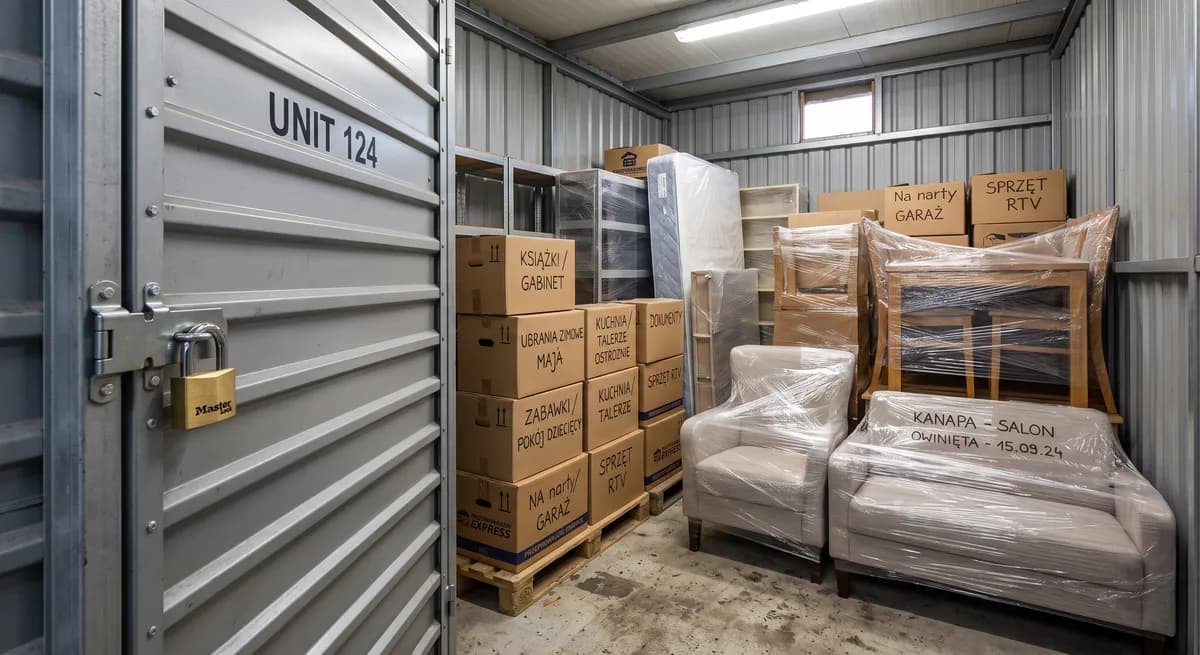
This is where an expensive mistake is easy to make. Home insurance protects belongings in a specific place, and a rented warehouse in another building is usually not that place. If there is a flood, a fire or a break-in, you may find out that the insurer will not pay out. Most often this only comes to light when you report the loss, when nothing can be changed any more.
Below we explain when home insurance may not be enough, what your options are and what to check in the policy terms before you leave your things in a warehouse. The rules described refer to Polish insurance, because that is where the listings on Maszbox.pl are located.
Does home insurance cover a rented warehouse?
Home insurance protects belongings in the place named in the policy: in the flat and in its appurtenant spaces. These are spaces that belong to the flat and that only you use, such as a basement, a storage unit or a parking space in the same building.
A warehouse or a self storage box rented in another building is not an appurtenant space of your flat. So do not assume that the policy covers it. Check in the general terms and conditions of insurance (OWU in Polish policies) how the insurer defines the insured location, or ask the insurer directly whether it covers things kept at another address.
A storage unit in your own block is different, because it is usually an appurtenant space. How to secure it so that it meets the policy conditions is described in our guide on how to secure a storage unit against theft.
Your insurance options
If your home insurance does not cover the warehouse, you usually have three options:
- Extending your current policy to an additional location. Some insurers let you add the address where you keep your things. Ask your insurer about it, because not every insurer offers this.
- Insurance offered by the facility. Some self storage facilities offer insurance for the contents of the box, and some require it in their rules. Check which events it covers and up to what amount.
- Separate insurance for your belongings with the warehouse address entered as the insured location. This is the option most often chosen for more expensive equipment or business stock.
When signing the rental contract, also ask who is liable for damage in the warehouse, for example after a leak from the building's installations. It is one of the points on the checklist for warehouse rental offers.
What to check in the policy terms
Whichever option you choose, check these things in the policy terms:
- Insured location. Whether the warehouse address is covered.
- Required security. For burglary, insurers often require a specific type of lock. For spaces outside the flat, some of them require, for example, a multi-lever lock or padlock. If the box has a weaker lock, you may not be entitled to compensation.
- Limit of liability. Belongings outside the flat are sometimes covered by a separate, lower limit than belongings inside the flat.
- Excluded items. Some insurers do not cover electronics, jewellery, furs or musical instruments, among other things, in spaces outside the flat.
- Covered events. Burglary is not the same as ordinary theft. Also check whether the policy covers flooding and fire.
Checklist: 5 things to check in the policy terms before storing your things in a warehouse
| Step | Area | What to check |
|---|---|---|
| 1 | Scope of cover | Does the standard insurance cover damage and theft? Is additional insurance required for valuable items? |
| 2 | Limitation of liability | What is the maximum compensation for lost or damaged property? Check the limits against the value of your things. |
| 3 | Storage conditions | Are temperature and humidity controlled? What security is in place (CCTV, alarms, access control)? |
| 4 | Access and extra services | What are the hours and rules of access to the warehouse? Are there fees for access? What extra services are offered (for example transport)? |
| 5 | Costs and contract terms | All fees: rent, insurance, handling fees, late payment penalties. Contract termination terms and notice period. |
Business stock in a rented warehouse
If you keep stock from an online shop or business materials in a warehouse, home insurance is usually not the right solution. It is intended for household belongings, not goods for sale. Confirm this with your insurer and consider business property insurance with the warehouse address as the insured location.
With stock, watch one more thing: its value changes together with your inventory level. If the sum insured is lower than the actual value of the stock, the compensation may not cover the loss. How to set up a small warehouse for a shop to limit the risk of damage, for example from damp, is described in the article small warehouse for an online shop.
How to document your belongings in case of a loss
When you report a loss, you have to show what was in the warehouse and what it was worth. Do it straight away, not after the event:
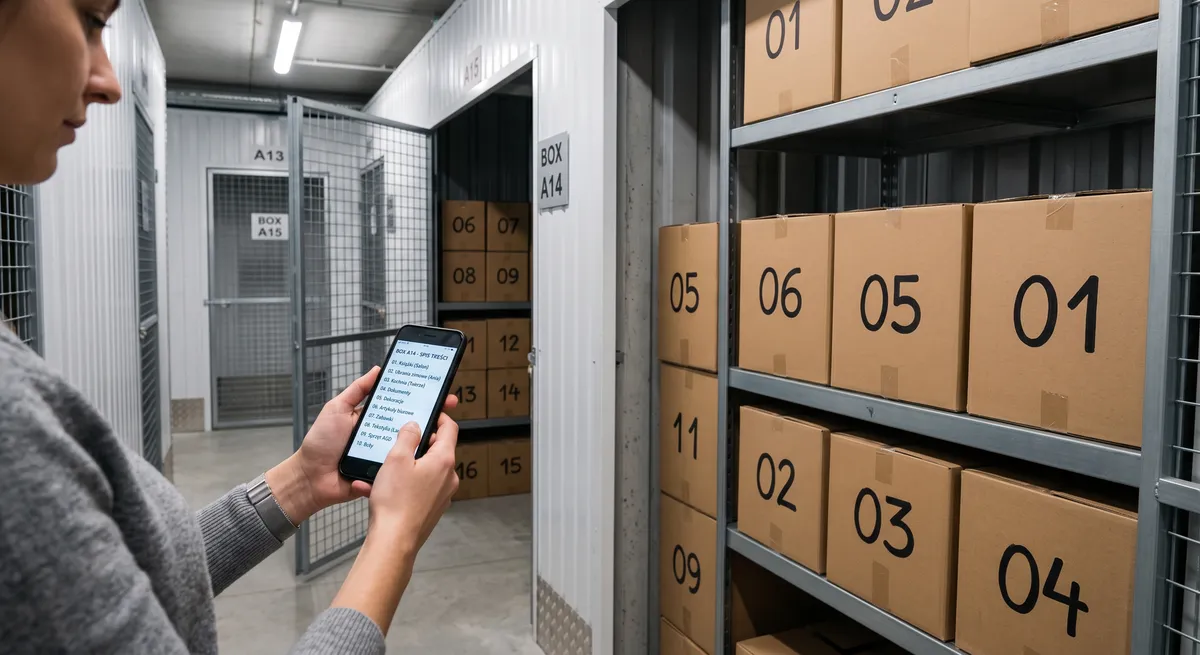
- a list of items with their approximate value, for example in a spreadsheet or a note on your phone,
- photos of the items and of the cardboard boxes stacked in the unit,
- receipts or invoices for more expensive items and stock,
- serial numbers of equipment,
- photos of the condition of the box on the day you take it over, which also help when the deposit is settled.
Update the list whenever you add or take out items. An out-of-date list is worth little when you report a loss.
If you are still choosing a place for your things, see the categories on the Maszbox home page and how to compare offers from facilities, or browse all listings in the warehouses category.

Marsel Zychowski
MaszBox Team
We share practical know-how on renting and selling space - garages, warehouses, storage units, parking spots and more.