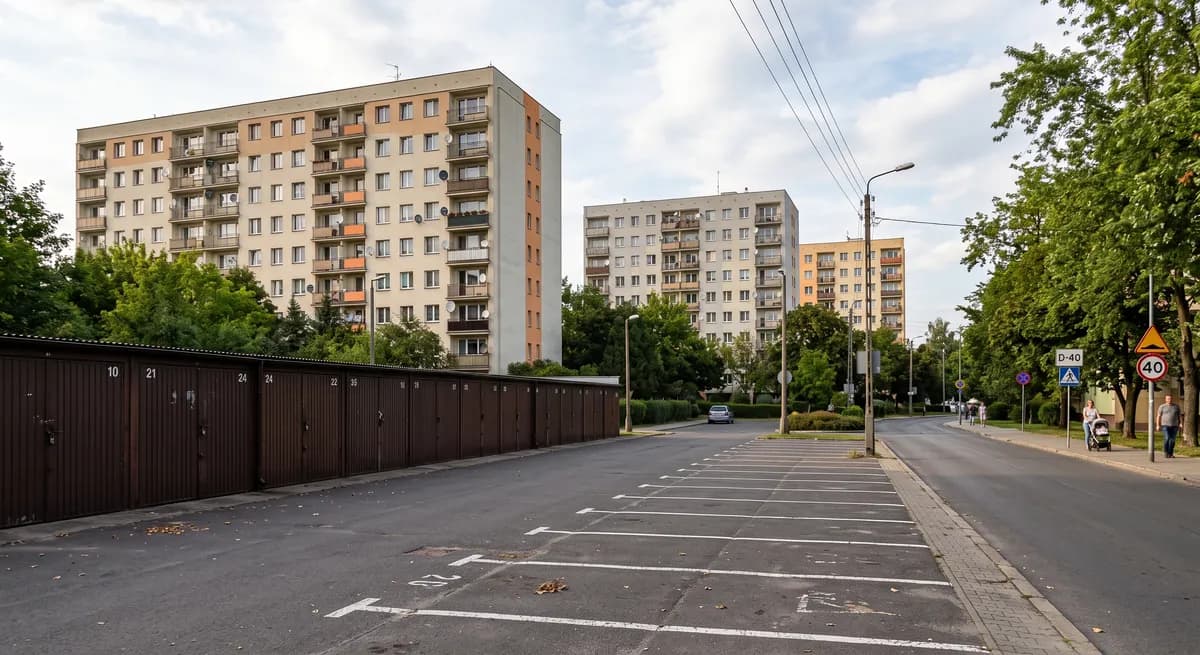
At the same time, someone in your area is looking for exactly this kind of place: for a bike, a car, stock from an online shop or a trailer. If you do not put up a listing, that person will find a place elsewhere, and you will keep paying for space you do not use. If, on the other hand, you rent it out without preparation, without an agreement and without settling the tax, it is easy to end up in a dispute with the tenant or in trouble with the tax office.
Below we describe what you can rent out and to whom, what to remember before putting up a listing, and how to set the price, draw up the agreement and settle the tax. For each type of space we point you to a guide that covers it in detail.
What you can rent out and to whom
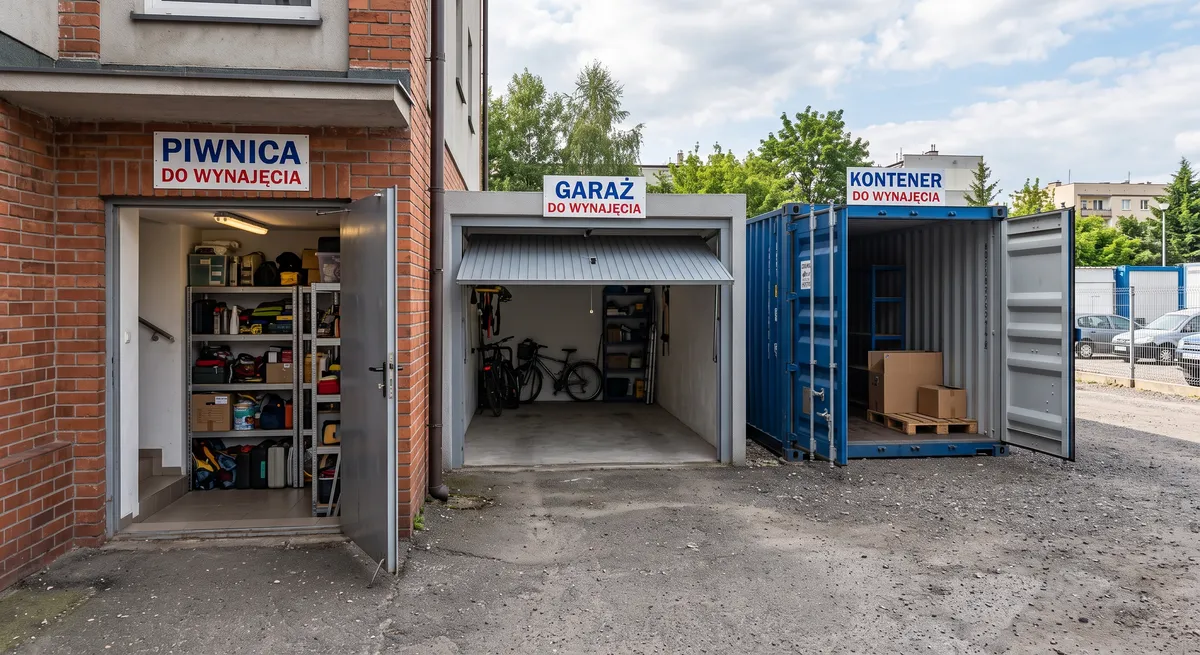
- Basement and storage unit. They are most often sought by local residents who lack space for a bike, seasonal equipment or things that do not fit in the flat. We explain whether and on what terms you can rent out a basement in a block of flats in the article can I rent out my basement.
- Garage and parking space. They are sought by drivers, especially where parking spaces are scarce, as well as motorbike owners or people who need space for tools. We describe how to prepare a garage so that you find a tenant faster in the guide how to get a garage ready to rent out.
- Attic. It is a good place for things used rarely, e.g. seasonal decorations or spare furniture. We show step by step how to list it in the guide to adding a rental listing for an attic.
- Plot of land. It can be used, for example, as a place to park a trailer, a boat or a camper van, or as a yard for materials. Before you rent it out, check whether the local zoning plan allows such use.
- Commercial unit. It is sought by companies and people starting a service business. We describe how to shorten the time a unit stands empty in the article how to rent out a commercial unit fast.
- Container and warehouse. They are most often sought by companies, online shops and people in the middle of building or renovating. A guide for container owners: how to rent out your container.
Before you put up a listing: can you rent out this space
Not every space you use can be rented out to someone else straight away:
- A basement or storage unit in a block of flats. First check its status. If it is a room appurtenant to your flat (this usually follows from the notarial deed or the land and mortgage register), it is part of your property. If it is a common part of the building that you only use, renting it out requires agreement with the other owners. In both cases, the building rules may set out how outsiders can be let in. You will find the details in the article can I rent out my basement.
- Space you rent yourself. If the basement, storage unit or garage belongs to a flat you rent, you cannot sublet it without the owner's consent (Article 688² of the Polish Civil Code).
- Plot of land. Check whether the local zoning plan or the planning conditions allow what the tenant wants to use it for.
How to set the price
The best reference point is similar listings in your area. Browse the offers in your category and city and compare those of a similar size and standard. The price is usually affected by:
- location: closer to the centre and where space is scarce, rates are higher,
- access: round-the-clock entry or access only at certain hours,
- standard: a dry room, lighting, a lock, CCTV,
- rental period: for a longer rental you can offer a lower rate in exchange for a steady tenant.
Rental agreement: what to always include
Maszbox connects the parties to a listing but is not a party to the agreement. You sign the agreement directly with the tenant. Whatever the type of space, include in it:
- the details of the parties and an exact description of the space (address, number, floor area),
- the rental period and the notice terms,
- the rent, the payment date and method,
- the deposit and the terms for returning it,
- the rules of use, including what must not be stored,
- liability for damage and the condition on return.
When handing over the keys, draw up a report and take photos. Using a storage unit as an example, we discuss in detail what a rental agreement must contain, including the clauses that are most often forgotten.
Tax on rental income
Since 2023, revenue from private rental, that is rental outside a business, has been taxed only with the flat-rate tax on recorded revenue:
- 8.5% of revenue up to PLN 100,000 a year,
- 12.5% on the excess over that amount,
- an annual return on the PIT-28 form.
If the space belongs to your company, you settle the rental revenue as part of the business. The rates may change, so check them before filing, and if in doubt, ask an accountant.
How to add a listing
Listings on Maszbox are free and commission-free. Describe the space, add photos, give the price and the rental terms following the guide to adding a listing. The more specifics you give straight away (floor area, access, lock, rules), the fewer questions you will get from interested people.

Marsel Zychowski
MaszBox Team
We share practical know-how on renting and selling space - garages, warehouses, storage units, parking spots and more.