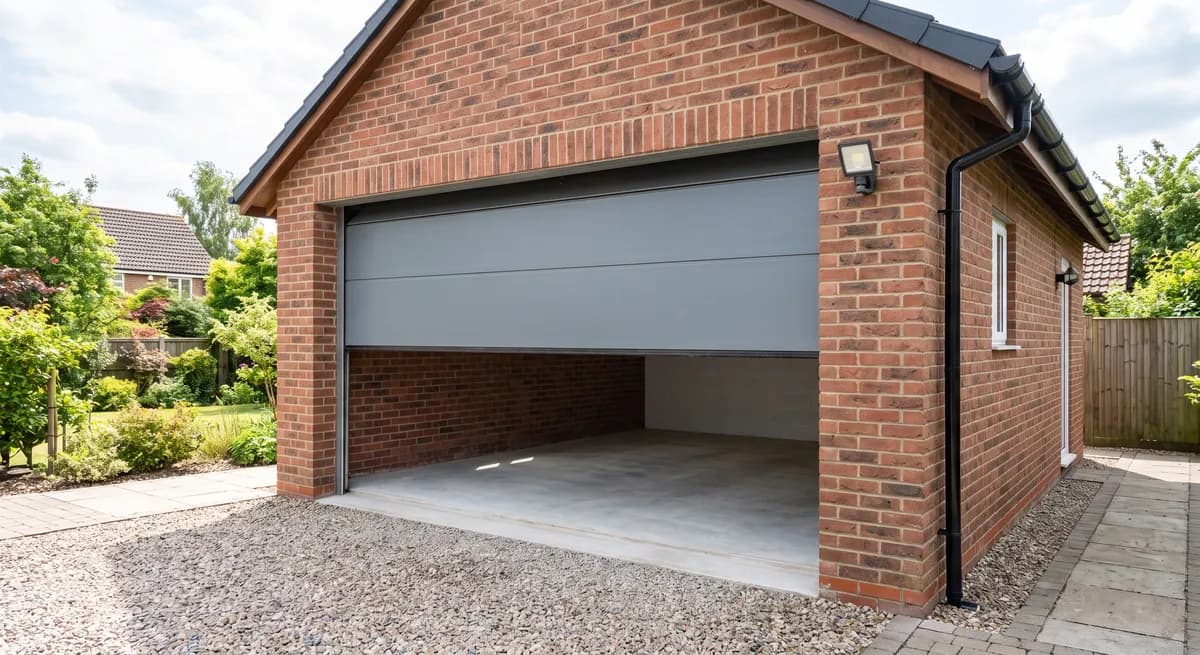
Usually the first thing to appear is a listing with one dark photo and no dimensions. Then everyone interested calls with the same questions, or does not call at all. Trouble also starts later. Without an agreement or a handover report, there is no way to settle a dispute over a broken door, a scratched wall or the return of the deposit.
This guide is 10 steps from checking whether you can rent out the garage at all to publishing the listing. After them, the garage is ready to show, and you have answers to the questions every tenant will ask.
1. Check whether you can rent out the garage
Before you start cleaning, make sure the decision to rent it out is yours.
- The garage has several owners, for example siblings after an inheritance. Agree the rental with the others, because it is not one person's decision.
- You have a space in a garage hall or a garage on an estate. Read the rules of the garage, the housing community or the cooperative. They may, for example, prohibit storing things other than a car or entry for cars with LPG systems. Such rules will also apply to your tenant.
- You rent the garage yourself, for example from the municipality or a cooperative. Check your agreement. Many such agreements prohibit subletting or require consent for it. Subletting without consent may be grounds for terminating your agreement.
If you are renting out a space in a hall rather than a closed box, see what the offers look like in the parking spaces for rent category.
2. Empty and clean the garage
The tenant wants to see an empty space where their car or things will fit. They should not be looking at your supplies.
- take out the boxes, tools, tyres and sports equipment,
- sweep and wash the floor, remove oil stains,
- remove cobwebs and dust from the walls and the ceiling,
- air the garage if it smells musty or of chemicals.
If you are deliberately leaving something, for example a sturdy shelf screwed to the wall, mention it in the listing and in the handover report.
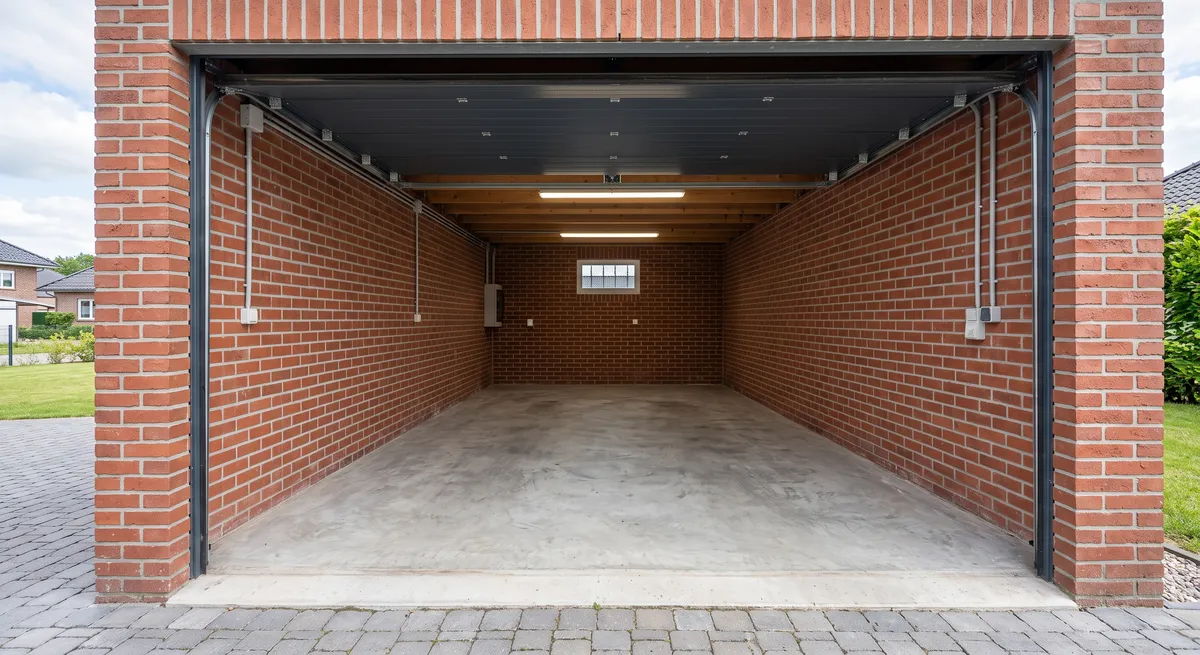
3. Check the roof, damp, ventilation and electricity
You do not have to renovate, but the tenant will quickly notice faults that could harm their car or belongings.
- Roof and walls: check for water stains, cracks and places where water gets in after rain.
- Damp: look into the corners, under the door and where the wall meets the floor. Mould or standing water is a common reason for turning a garage down.
- Ventilation: clear the ventilation grilles. A garage where a car is parked must have air flow.
- Electricity and lighting: replace burnt-out bulbs. If the wiring is old or something sparks, call an electrician before anyone starts using it.
- Small fixes: remove rust from the door, paint scuffed walls, replace worn seals.
4. Take care of the door, locks and keys
A door that jams or a lock that someone else may still have a key to is the first thing a tenant will ask about.
- Door: lubricate the hinges and the guides. Check that it opens and closes without force. With an automatic door, test the remotes.
- Lock: consider replacing the cylinder. It is a small cost, and the tenant can be sure that none of the previous users has a key.
- Keys and remotes: count the sets. If the garage is in a hall or behind a barrier, ask the manager how to get an extra remote or card for the tenant.
- Your spare key: you can keep it. However, write into the agreement that you do not enter the garage without agreeing it with the tenant, except in an emergency.
If you want to secure the garage further, you will find tips in the guide how to secure a storage unit against theft. Solutions such as bolts, padlocks or sensors work the same way in a garage.
Camera: if you install your own, point it only at your garage and tell the tenant about it. A camera that covers the road, other people's garages or common areas may be subject to the GDPR. In a building of a housing community or cooperative, installing it also requires agreement with the manager.
Insurance: you can insure the garage itself against fire, flooding or vandalism. However, your policy does not cover the tenant's car or belongings. The tenant takes care of protecting them, for example with comprehensive car insurance or their own property insurance. Tell them this plainly before you sign the agreement.
5. Measure the garage and the entrance
“Garage 18 m²” does not answer the tenant's most important question: will my car fit in here? Measure more than just the floor area.
| What to measure | Why |
|---|---|
| Width and height of the door opening | The entrance is often narrower and lower than the interior. It decides whether an SUV, a van or a car with a roof box will get in. |
| Length, width and height of the interior | Shows whether the car doors can be opened and whether shelves or a motorbike will fit. |
| Floor area in m² | Lets you compare your garage with other listings. |
| Width of the access road in front of the garage | With a narrow access road, a larger car may have trouble manoeuvring. |
| Height of the entrance to the hall (if the garage is in a hall) | The entrance to the hall is often lower than the parking space itself. |
Give the dimensions in metres, accurate to the centimetre. Tenants with large cars compare them with their car's data.
6. Take photos that answer the tenant's questions
The photos should show what the tenant would see on site. Take them in daylight, with the door open and the light on.
- the whole interior from the entrance side,
- the interior from the other side, from the back wall towards the door,
- the door from outside, closed and open,
- the access road and the surroundings of the garage,
- details: lighting, socket, lock, shelf (if it stays).
Respect other people's privacy. The photos should not show other people's number plates, neighbours or their garages with the door open. If something like that gets into the frame, blur it before publishing. Do not use photos from the internet or photos of another garage.
7. Describe the garage specifically and truthfully
A good description saves you calls with the same questions. An honest description protects you from the claim that the tenant got something different from the listing.
Include in the description:
- the type of garage (brick, metal, a box in a row of garages, a space in a hall),
- the address or at least the street and the estate,
- the dimensions from the table above,
- the type of door (up-and-over, sectional, automatic),
- whether there is electricity, lighting and a socket,
- whether the garage is dry and whether it is heated,
- whether things may be stored or it is for parking only,
- from when the garage is free and for how long you want to rent it out.
Electricity and charging an electric car: say whether charging is possible and who pays for the electricity. In a garage hall, the socket is often connected to the housing community's meter. Then charging a car requires the manager's consent, not just yours.
Security: only describe what works. If the estate's CCTV does not cover your garage or the camera is a dummy, do not write “monitored area”.
8. Set the price based on listings in your area
There is no single rate for a garage. The price depends on the city and the district, the type of garage, the dimensions, electricity and how hard it is to find a parking space in the area.
The simplest way is to check how much similar garages in your area cost. Go to the garages for rent category and narrow the results down to your city. Compare garages similar to yours: brick with brick, one with electricity with another that also has electricity.
In the listing, say clearly what the price includes. Is it the rent alone, or the rent together with the housing community fees and electricity? Also give the amount of the deposit. An unclear price is one of the most common reasons for misunderstandings in the first conversation.
9. Prepare the agreement and the handover report
You sign the agreement directly with the tenant. Maszbox.pl is a listings service and is not a party to that agreement. That is why you should prepare it before the first viewing, so that you can sign it straight away.
A garage rental agreement should include:
- the details of the parties (it is enough to write down the tenant's details, you do not have to copy their ID card),
- an exact description of the garage: address, box or space number, equipment,
- the purpose, that is parking a car, storing things or both,
- the amount of rent, the payment date and method, and who pays for electricity and administrative fees,
- the deposit and the rules for returning it,
- the duration of the agreement and the notice rules,
- a ban on storing fire-hazardous materials, for example gas cylinders or fuel in jerrycans,
- the rules for the owner entering the garage and for subletting,
- the obligation to follow the rules of the garage or the housing community, if there are any.
Notice: with an indefinite-term agreement and rent paid monthly, the statutory notice period is one month in advance, to the end of a month, unless you agree otherwise. With a fixed-term agreement, write down in which situations it can be terminated. Without such a clause, neither party can end it early, except in a few cases under the Civil Code (e.g. rent arrears for two full payment periods).
Repairs: under the Civil Code, the landlord keeps the garage fit for use, for example repairs the roof or the door mechanism. Minor outlays, such as replacing a light bulb, are the tenant's responsibility. If you want to split this differently, write it into the agreement.
Handover report: on the day of the handover, write down the condition of the garage, the number of keys and remotes and the meter reading, if there is a separate meter. Also take dated photos. At the end of the rental, the report is the basis for settling the deposit.
We also describe which clauses work well when renting out a small space in the article storage unit rental contract - what it must contain. Most of these rules also fit a garage.
Tax on renting out a garage
Rent from a garage is revenue on which you pay tax. For a private rental, that is outside a business, this is a flat-rate tax: 8.5% of revenue up to PLN 100,000 a year and 12.5% on the excess. We describe what counts as revenue and how to settle the rental step by step in the guide how to earn from spare space. In an unusual situation, for example with several garages or renting as part of a business, ask an accountant.
10. Add a listing on Maszbox.pl
The garage is ready, and you have the photos, dimensions, description, price and agreement. Now add a listing in the garages category.
We show how to do it step by step, with screenshots, in the guide how to add a long-term rental listing for a detached garage. You will find the general rules for adding listings on the how to add a listing page.

Marsel Zychowski
MaszBox Team
We share practical know-how on renting and selling space - garages, warehouses, storage units, parking spots and more.