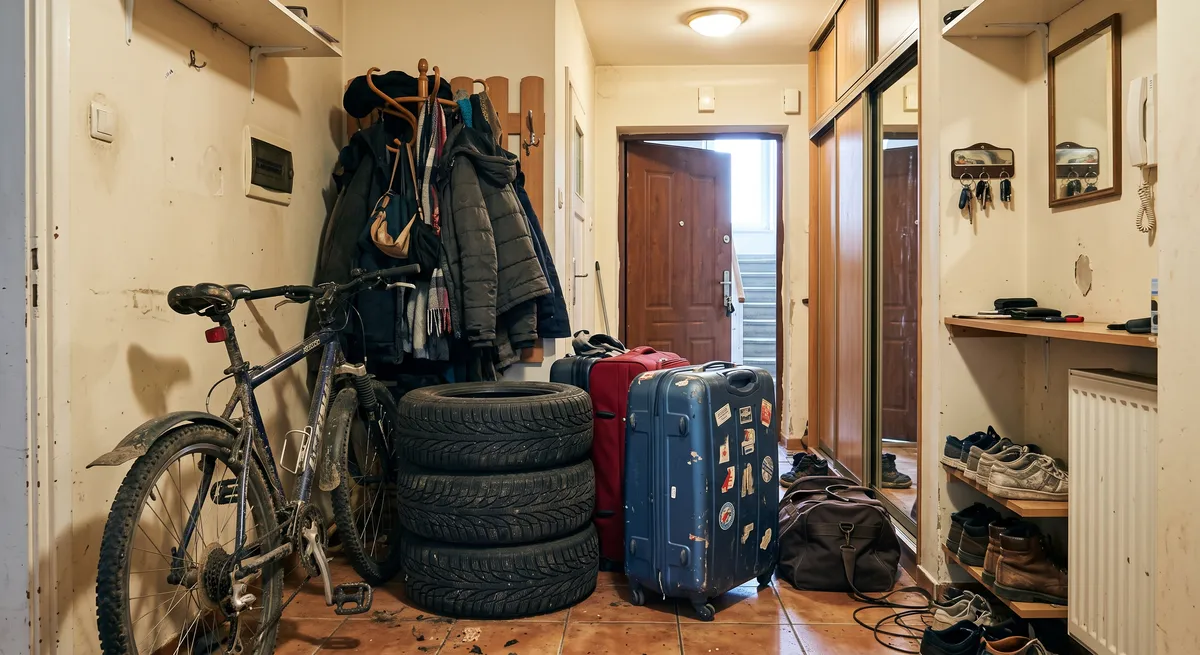
Your flat has no basement, and the bikes, winter tyres and suitcases are taking over the hallway. Or the other way round: there is a basement, but it is so damp that nothing survives a season in it. Without extra storage space you trip over things you never use, and the flat keeps shrinking.
If you start looking for a storage unit without knowing the prices, it usually ends one of two ways: you pay more for a warehouse far from home because you never checked what was closer, or you sign a private rental contract without reading the details and two months later lose your deposit in an argument about the unit's condition.
Below you will find real 2026 price ranges, a comparison of renting against buying a unit from a developer, what to look for in the contract, and a step by step way to find an offer through listings rather than by phoning a self-storage company that quotes you only after a sales call.
How much does renting a storage unit cost in 2026?
Renting a storage unit follows two completely different pricing paths, and most guides online mix them together.
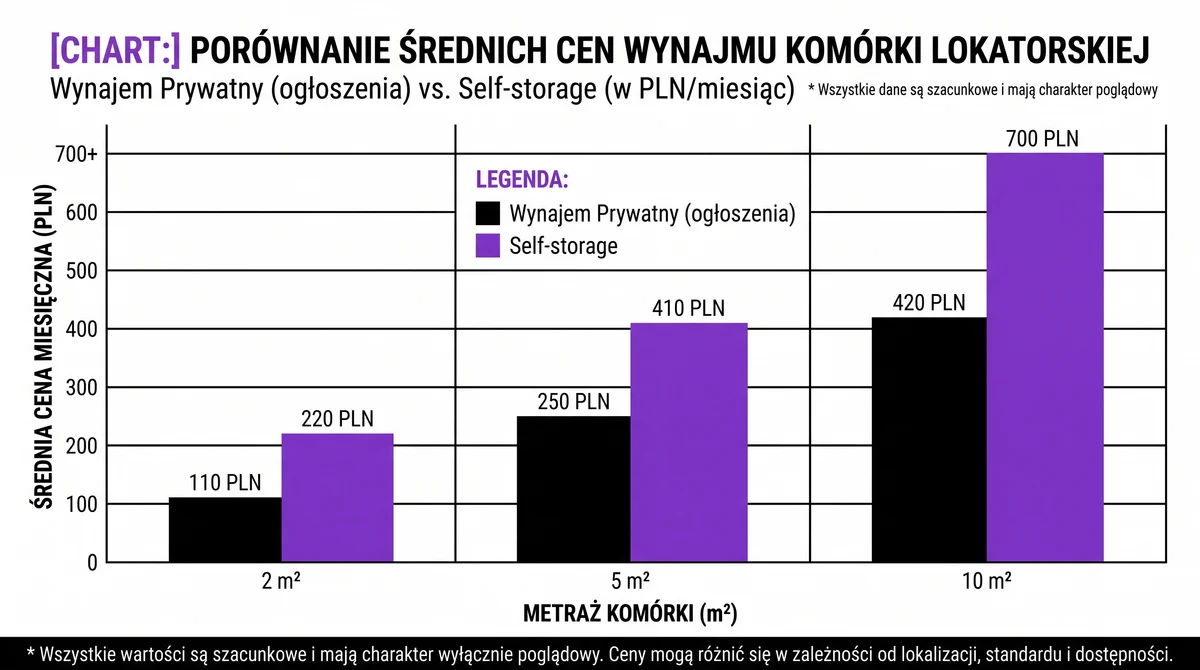
Private rental through listings - a real example from current storage unit rental offers: a 2 m² brick unit on a gated estate in Ursynow, Warsaw, costs 200 zloty a month (example from a Maszbox listing, September 2026). The price depends on the city, the district, the size and whether the building is guarded. You can check current rates in your area in the listings of storage units for rent.
A self-storage subscription - rates depend on the size, the location of the facility and the length of the contract. Some companies publish price lists, others quote a price only on request, so compare several offers for the same size before you decide.
Private rental through listings can work out cheaper than a self-storage subscription for the same floor area, because you are not paying for 24/7 monitoring, air conditioning or a reception desk. It also means fewer safeguards, which the section on the contract covers.
Storage unit or basement - what is the difference when renting
The distinction is practical, not just a matter of vocabulary:
- A basement is usually a space appurtenant to a specific flat in an older building. It can be rented out, but you need to check its legal status first. We explain this in the guide can I rent out my basement.
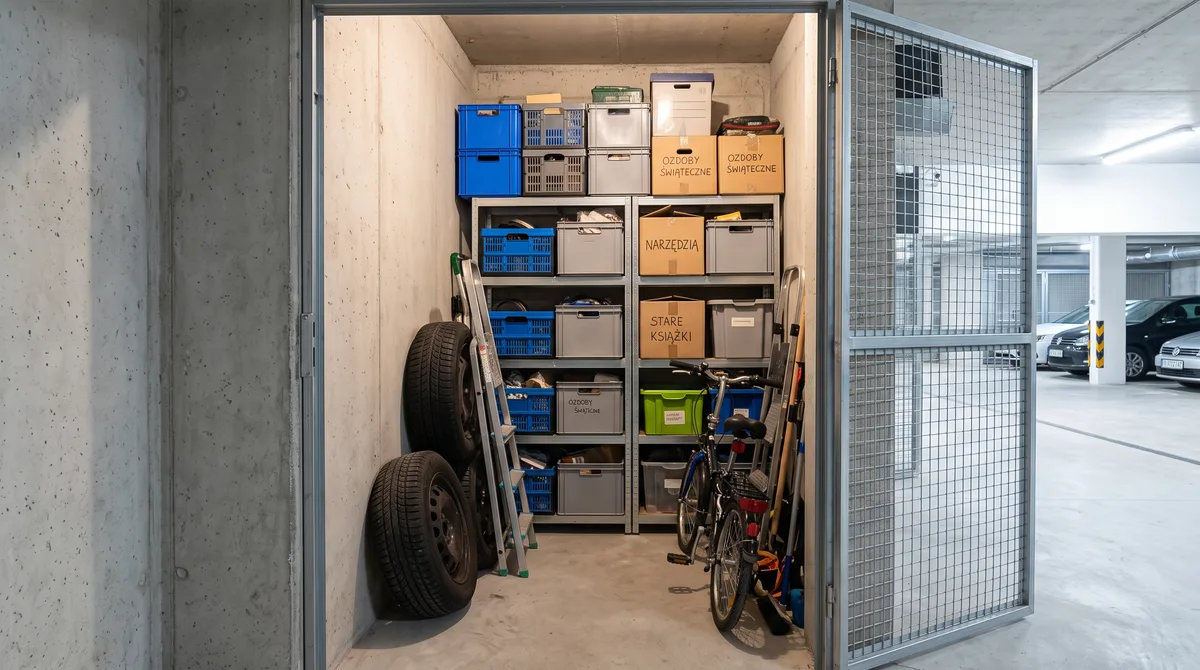
- A storage unit is a separate, lockable room (in the building's basement, in the garage hall or off the stairwell) with its own number and its own key. It can be rented on its own, independently of any flat, under a separate contract.
Rent or buy a storage unit - which pays off?
This is the biggest difference from other guides: most of them write only about buying a unit from a developer along with a flat. If you need extra space now and are not buying a new flat, you have three real options, not one.
Buying from a developer vs. a self-storage subscription vs. private rental through listings
| Option | Cost | When it makes sense |
|---|---|---|
| Buying from a developer | One-off payment, according to the developer's price list | You are buying a flat in the same development and plan to stay for years, so the cost spreads across the mortgage |
| Self-storage subscription | Monthly subscription depending on the size | You need the space briefly (a move, a renovation) or you want monitoring and air conditioning |
| Private rental through listings | Monthly rent agreed with the owner | You need it cheap, close to home, without a long financial commitment |
A worked example: suppose a 3 m² unit costs 20,000 zloty to buy or 200 zloty a month to rent. The cumulative cost of both options then looks like this:
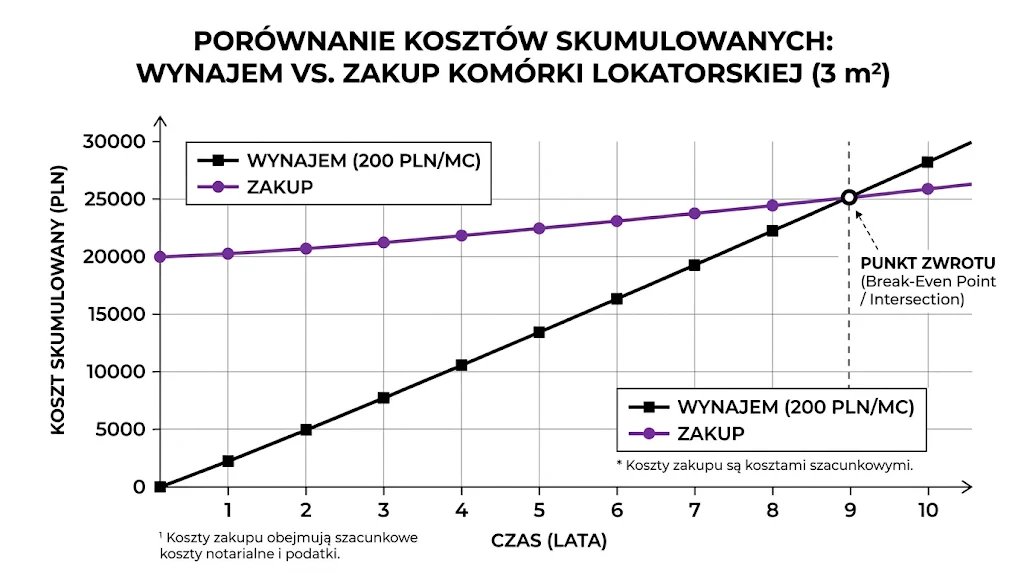
The break-even point falls in the ninth year, and only then does renting become more expensive than buying. Assumptions: rent of 200 zloty a month indexed at 4 percent a year, a purchase price of 20,000 zloty including notary costs and tax, plus about 550 zloty a year in charges. Values are estimates.
What to look for in the rental contract
The clauses that matter
The contract should state at least the unit's number and floor area, the rent and the rules for raising it, the deposit and the conditions for getting it back, the notice period and who insures the stored items. You will find the full list of clauses in the article storage unit rental contract: what it must contain (and what gets forgotten).
Red flags in a listing - renting from a private owner
When renting a storage unit directly from the owner through listings, rather than from a company with terms and conditions, watch for warning signs that guides written from a self-storage perspective never mention:
- A listing with no photos of the interior - if the owner shows only the building from outside and never the room itself, it may mean the room has defects, such as damp or no ventilation.
- No written contract, with assurances that a verbal agreement is enough - without a contract you have no basis for recovering the deposit and no proof of the terms.
- A price clearly below the market for that district with no explanation, for example no lock, or access shared with other tenants.
- A demand for a cash deposit with no receipt.

How to find and rent a storage unit through listings - step by step
- Define what you need - how much space you actually need (tyres and bikes are a different size from furniture during a renovation) and whether being close to home matters more than the price. If you need more room than a typical unit, for workshop equipment or company stock for example, look at warehouses for rent or garages for rent too.
- Search the offers in your district - on the list of storage units for rent, filter by city and size instead of going through everything.
- Check the photos and the description of the condition - look for information about damp, ventilation and the type of security. A brick unit with a lock is a different standard from mesh in a garage hall.
- Ask about access - whether the unit is available 24/7 or only during the building's opening hours. That matters if you plan to come back for things often.
- Ask for a written contract before paying the deposit - a short one is fine, as long as it has the clauses above.
- See the unit in person before signing - photos in a listing are sometimes years old, and the condition may have changed.
Storage unit rental prices in different cities
Developer prices for buying units are sometimes published city by city, but for private rental there is practically no such data, because the market is scattered across listings rather than collected in one price list. Roughly, based on the offers available:
- Warsaw - the highest rates, especially in central, well connected districts. A real offer in Ursynow is 200 zloty a month for 2 m² in a guarded building.
If you are looking for a specific price in your city, the most accurate source is the current listings in that location, for example storage units for rent in Warsaw. Prices change more often than any nationwide guide manages to update.

Marsel Zychowski
MaszBox Team
We share practical know-how on renting and selling space - garages, warehouses, storage units, parking spots and more.